Ways to resolve QuickBooks error 6000?
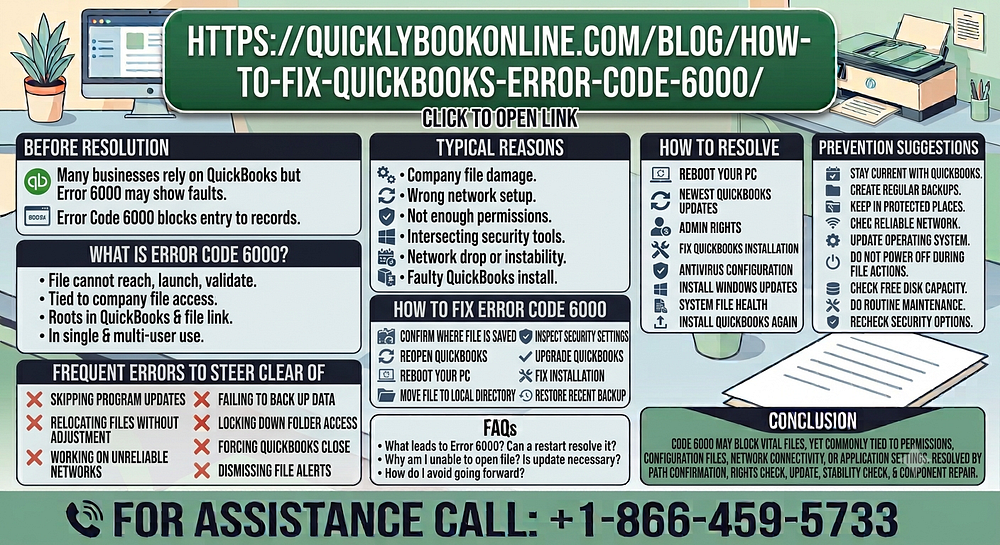
Many businesses rely on QuickBooks as a popular bookkeeping tool to handle money records, payroll, billing, spending, and financial statements. By streamlining accounting duties, it makes routine financial work easier to manage each day. Still, as with any program, QuickBooks may sometimes show faults that block users from reaching critical company records. Among the frequently reported problems is the QuickBooks 6000 error.
What Does QuickBooks Error Code 6000 Mean?
When QuickBooks cannot reach, launch, or validate a company file, it triggers Error Code 6000, which is tied to the company file. The alert can show up in several forms depending on circumstances, yet the root trouble typically involves the link between QuickBooks and the company file.
This problem can occur in both single-user setups and shared multi-user use, and it can disrupt standard accounting work.
Typical Reasons Behind QuickBooks Error Code 6000
Knowing what may be causing it makes it easier to choose the right fix.
Company File Damage
A company file that has become corrupted is a leading reason this issue shows up.
Wrong Network Setup
When the company file sits on a different machine, faulty network configuration can stop QuickBooks from reaching it.
Damaged Setup Files
Files used by QuickBooks to find the company file can degrade or break as time passes.
Not Enough Permissions
When Windows blocks entry to the company file or the folder it’s in, QuickBooks can present the 6000 error.
Interference from Security Tools
Some antivirus or firewall options can block QuickBooks from exchanging data with the company file.
Network Drop or Instability
An unreliable or weak connection may break the communication needed for shared files.
Faulty QuickBooks Install
Damaged program components can also lead to trouble opening or reaching company files.
Indicators You May Be Facing QuickBooks Error Code 6000
When this issue happens, you might observe multiple signs.
- The company file will not open.
- You see error prompts while trying to view company information.
- QuickBooks hangs when launching.
- The program shuts down without warning.
- Multi-user mode stops working.
- Network-based company files won’t open.
- Your computer runs noticeably slower while QuickBooks is in use.
Steps to Fix QuickBooks Error Code 6000
Confirm Where the Company File Is Saved
Make sure the company file is in the intended directory and that your computer can reach it.
Reopen QuickBooks
Exit the program fully, then start it again. A restart often clears short-lived software glitches.
Reboot Your PC
A system restart refreshes Windows services and can bring back normal access to files.
Move the Company File to a Local Directory
When the file is on a network, copy it to a folder on your computer for the moment and try opening it once more.
Confirm Directory Access Rights
Check that the folder holding the company file grants the required permissions for reading and writing.
Change the Names of Configuration Files
When those locating files are corrupted, letting QuickBooks generate new ones can fix access issues.
Check the Network Status
If QuickBooks is used on more than one computer, confirm the network is steady and operating as it should.
Inspect Security Settings
See if firewall or antivirus controls are blocking QuickBooks from reaching company files.
Upgrade QuickBooks
Apply the newest QuickBooks updates available to enhance compatibility and fix known problems.
Fix the QuickBooks Installation
Use your operating system’s repair feature to correct damaged QuickBooks program components.
Bring Back a Recent Backup
If the company file is badly corrupted, loading a newer backup can help retrieve your accounting information.
Ways to Avoid QuickBooks Error Code 6000
Using these recommended habits can lower the likelihood of running into this issue later.
- Stay current with QuickBooks updates.
- Create regular backups of the company file.
- Keep company files in protected places.
- Keep the network connection reliable.
- Check folder permissions from time to time.
- Update your operating system routinely.
- Do not power off the computer while QuickBooks is open.
- Keep an eye on free disk capacity.
- Do regular maintenance on files.
- Recheck security software options after updates.
Frequent Errors to Steer Clear Of
When handling QuickBooks company files, watch out for these typical missteps.
- Skipping program updates.
- Relocating company files without adjusting their path.
- Working over unreliable network links.
- Failing to back up data on a schedule.
- Locking down folder access too tightly.
- Forcing QuickBooks to close during file actions.
- Dismissing alerts tied to company files.
By staying away from these errors, you can keep dependable access to your accounting records.
Frequently Asked Questions (FAQs)
What Leads to QuickBooks Error Code 6000?
This issue is often due to corrupted company files, misconfigured networks, limited access rights, damaged configuration files, or interference from security programs.
Can a QuickBooks Restart Resolve Error Code 6000?
Yes. Closing and reopening QuickBooks, along with rebooting the computer, may clear short-term communication or access troubles.
Why Am I Unable to Open My QuickBooks Company File?
Your file could be corrupted, saved somewhere you can’t reach, blocked by permissions, or impacted by network or configuration issues.
Is It Necessary to Update QuickBooks When I Get Error Code 6000?
Yes. Adding the newest updates may fix known defects and improve how company files work with the program.
How Do I Avoid QuickBooks Error Code 6000 Going Forward?
Keep QuickBooks current, back up company files on a regular basis, ensure proper folder access rights, use a dependable network, and complete routine program upkeep.
Conclusion
QuickBooks Error Code 6000 may block entry to vital company files, yet it is commonly tied to permissions, broken configuration files, network connectivity, or application settings instead of irreversible loss of data. In many cases, people can fix it by confirming file paths, checking access rights, updating QuickBooks, validating network stability, and repairing damaged application components.


Comments
Post a Comment