How to Set Up a New Company in QuickBooks: A Complete Step-by-Step Guide
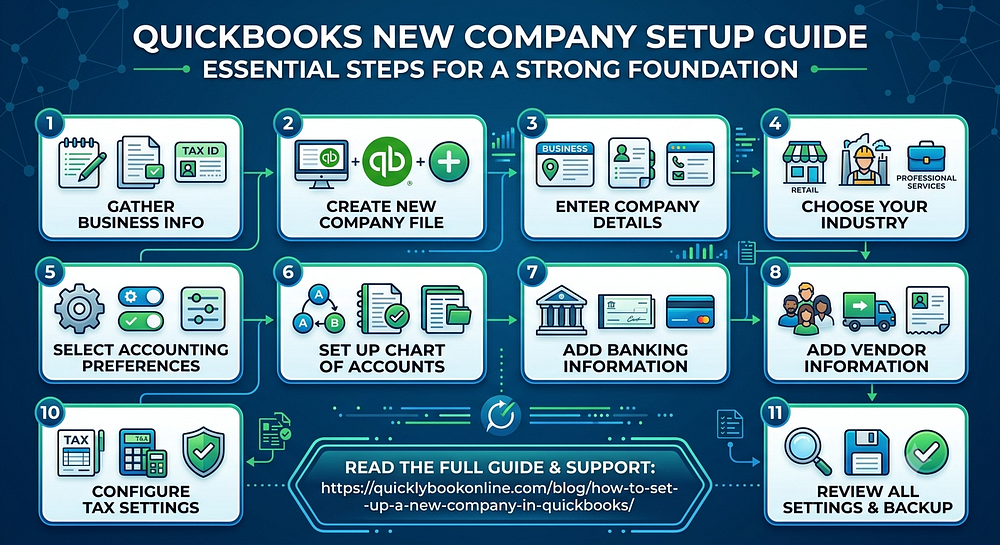
Setting up a new company in QuickBooks is one of the first and most important steps toward managing your business finances efficiently. A properly configured company file allows you to organize income, expenses, customers, vendors, payroll, inventory, and financial reports in one place. Whether you are starting a new business or moving your accounting records into QuickBooks, taking the time to set up your company correctly can save time and reduce bookkeeping errors in the future.
Although the setup process may seem overwhelming at first, it becomes much easier when completed one step at a time. By entering accurate business information, selecting the appropriate settings, and reviewing your preferences carefully, you can build a strong foundation for your accounting system.
Why Is Proper Company Setup Important?
Your company file serves as the foundation of your financial records.
A properly configured setup helps you:
- Organize financial information efficiently.
- Track income and expenses accurately.
- Manage customer and vendor information.
- Monitor business performance.
- Generate reliable financial reports.
- Reduce bookkeeping errors.
- Simplify daily accounting tasks.
- Maintain organized business records.
Taking the time to complete the initial setup correctly can prevent many accounting issues later.
Gather Your Business Information
Before creating your company file, collect the essential information you will need.
This may include:
- Business name
- Business address
- Contact information
- Business type
- Business structure
- Fiscal year preferences
- Banking information
- Tax-related information
- Customer details
- Vendor details
Having this information ready makes the setup process faster and more efficient.
How to Set Up a New Company in QuickBooks
Step 1: Create a New Company File
The first step is creating a new company file.
During this process, you will enter your business information and establish the foundation for your accounting records.
Carefully review every detail before completing the setup to ensure all information is accurate.
Step 2: Enter Your Company Information
Provide your business details exactly as you want them to appear on invoices, estimates, reports, and other financial documents.
Accurate company information helps maintain professional records and improves reporting consistency.
Review all entries before moving to the next step.
Step 3: Choose Your Industry
QuickBooks allows you to select an industry that closely matches your business.
Choosing the appropriate industry helps organize accounting features and provides settings tailored to your business activities.
Select the option that best represents your operations.
Step 4: Choose Your Accounting Preferences
During setup, you will be asked to configure several accounting preferences.
These settings determine how QuickBooks manages your financial records.
Take time to review every option carefully before making your selections.
Choosing the correct preferences from the beginning helps minimize future adjustments.
Step 5: Set Up Your Chart of Accounts
The Chart of Accounts forms the backbone of your bookkeeping system.
It organizes your assets, liabilities, income, expenses, and equity into clearly defined categories.
Review the suggested accounts and customize them to match your business operations.
A well-organized Chart of Accounts makes financial reporting much easier.
Step 6: Add Your Banking Information
Connecting your business banking information helps organize financial transactions more efficiently.
Carefully review each account before adding it to your company file.
Accurate banking information improves bookkeeping accuracy and simplifies account reconciliation.
Step 7: Enter Customer Information
Adding customer details early allows you to begin creating invoices and tracking payments immediately.
Include accurate customer names and contact information to maintain organized records.
Keeping customer information updated also improves communication and reporting.
Step 8: Add Vendor Information
Vendor information helps you manage purchases and business expenses.
Enter vendor details carefully to simplify future transactions and expense tracking.
Maintaining complete vendor records supports accurate financial reporting.
Step 9: Configure Payment Preferences
Review your preferred payment methods and financial settings during the setup process.
Choosing the appropriate payment preferences helps streamline customer payments and internal accounting processes.
Make sure these settings reflect your business requirements.
Step 10: Review Tax Settings
Tax settings should be reviewed carefully before entering transactions.
Accurate tax preferences help maintain reliable financial records and improve reporting throughout the year.
Verify every setting before completing the setup.
Tips for a Successful QuickBooks Company Setup
Following these best practices will help you maintain an organized accounting system.
- Gather all business information before beginning the setup.
- Review every setting carefully.
- Keep customer and vendor records updated.
- Create regular company file backups.
- Maintain organized financial records.
- Review company information periodically.
- Update business details whenever changes occur.
- Customize your Chart of Accounts to fit your business.
Common Mistakes to Avoid
Avoid these common mistakes when setting up a new company in QuickBooks.
- Entering incorrect business information.
- Choosing the wrong accounting preferences.
- Creating duplicate customer or vendor records.
- Ignoring tax settings.
- Skipping the final review process.
- Forgetting to create a backup.
- Allowing unnecessary user access.
- Failing to organize the Chart of Accounts properly.
Avoiding these mistakes helps build a reliable accounting system from the beginning.
Frequently Asked Questions (FAQs)
What Information Should I Prepare Before Setting Up a New Company in QuickBooks?
Prepare your business name, contact information, banking details, customer information, vendor information, industry type, tax details, and accounting preferences before starting the setup process.
Why Is the Chart of Accounts Important?
The Chart of Accounts organizes your financial data into categories, making bookkeeping, reporting, and financial analysis much easier.
Should I Create a Backup After Setting Up My Company?
Yes. Creating a backup immediately after completing the setup protects your company file and provides a reliable recovery point if needed.
Can I Customize My Company Settings Later?
Yes. Many company settings can be reviewed and modified as your business grows and your accounting needs change.
How Can I Keep My QuickBooks Company Organized?
Maintain accurate customer and vendor records, review company information regularly, create frequent backups, organize your Chart of Accounts carefully, and record transactions accurately and consistently.
Conclusion
Setting up a new company in QuickBooks is an important step toward maintaining accurate financial records and managing your business efficiently. Although the process requires careful attention, investing time in a proper setup makes daily bookkeeping much easier and reduces the risk of future accounting issues. By organizing your company information correctly from the start, you can create a reliable accounting system that supports your business as it grows.


Comments
Post a Comment