How to Set Up QuickBooks Desktop on a New Computer: A Complete Step-by-Step Guide
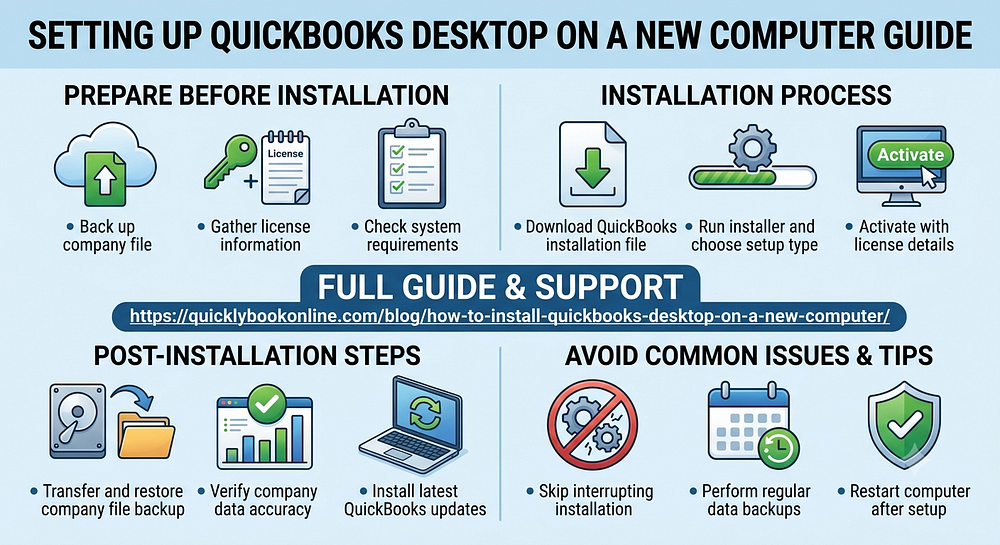
Installing QuickBooks Desktop on a new computer is an important step when upgrading your device, replacing an old computer, or setting up a new system for your business. QuickBooks Desktop is widely used for managing accounting tasks such as bookkeeping, invoicing, payroll, inventory, expense tracking, and financial reporting. A proper installation ensures that you can continue working with your company files without interruptions.
Many users worry that moving QuickBooks Desktop to a new computer is complicated or that they may lose important financial data. Fortunately, the process is straightforward when you prepare everything in advance. By having your QuickBooks license information, company files, and the correct installation package ready, you can complete the setup without unnecessary delays.
Things to Prepare Before Installing QuickBooks Desktop
Preparing in advance makes the installation process much smoother.
Confirm System Compatibility
Make sure your new computer meets the minimum system requirements needed to run QuickBooks Desktop efficiently.
Locate Your License Information
Keep your QuickBooks license and product information readily available, as you may need it during installation and activation.
Back Up Your Company File
Create a recent backup of your QuickBooks company file before moving to the new computer. This helps protect your financial data during the transfer.
Close Unnecessary Programs
Close all unnecessary applications before starting the installation to reduce the risk of software conflicts.
Ensure Sufficient Storage Space
Verify that your computer has enough available storage for QuickBooks Desktop, company files, and future updates.
How to Install QuickBooks Desktop on a New Computer
Step 1: Download the Installation File
Download the correct QuickBooks Desktop installation file for your licensed version.
Step 2: Run the Installer
Open the installation file and begin the setup process.
Step 3: Accept the License Agreement
Review the software license agreement and accept the terms to continue.
Step 4: Choose the Installation Type
Select the installation option that best fits your business needs.
Step 5: Complete the Installation
Allow the installation process to finish without interrupting it.
Step 6: Restart Your Computer
Restart your computer after installation to ensure all QuickBooks components load correctly.
Step 7: Activate QuickBooks Desktop
Open QuickBooks Desktop and complete the activation process using your license information.
Step 8: Restore Your Company File
Transfer your company file from the backup and restore it within QuickBooks Desktop.
Step 9: Verify Your Data
Review your company information, customer records, vendor details, payroll information, inventory, and financial reports to ensure everything has transferred correctly.
Step 10: Print a Test Report
Generate a simple report to confirm that QuickBooks Desktop is working properly.
Common Problems During QuickBooks Desktop Installation
Some users may experience issues while installing QuickBooks Desktop on a new computer.
Installation Does Not Complete
The installation may stop because of insufficient permissions, antivirus interference, or software conflicts.
Activation Issues
Incorrect license information or internet connectivity problems may prevent QuickBooks from activating.
Company File Will Not Open
The company file may be damaged, incomplete, or stored in the wrong location.
QuickBooks Runs Slowly
Limited system resources or background applications may reduce software performance.
Missing Company Data
Using an outdated backup file may result in missing transactions or financial records.
How to Fix QuickBooks Desktop Installation Problems
Restart Your Computer
Restart your computer and try the installation again.
Verify Your License Information
Double-check your license and product details before activating QuickBooks.
Run the Installer as Administrator
Launching the installer with administrative privileges can resolve permission-related issues.
Check Available Storage
Ensure your computer has enough free disk space for the installation.
Update Your Operating System
Install the latest operating system updates to improve compatibility and system stability.
Restore the Backup Again
If your company file does not open correctly, restore the backup file again.
Update QuickBooks Desktop
Install the latest available QuickBooks updates to improve performance, security, and compatibility.
Verify Company File Integrity
Open your company file and confirm that all financial information is complete and accurate.
Tips for a Successful QuickBooks Desktop Installation
Following these best practices can help ensure a smooth installation process.
- Back up your company file before moving to a new computer.
- Keep your QuickBooks license information readily available.
- Install the latest version of your operating system.
- Close unnecessary programs before installation.
- Ensure sufficient free storage space.
- Update QuickBooks Desktop immediately after installation.
- Restart your computer after completing the setup.
- Verify your company data after restoring the backup.
- Perform regular backups to protect your financial records.
- Keep QuickBooks Desktop updated with the latest releases.
Common Mistakes to Avoid
Avoid these common mistakes during installation.
- Skipping the company file backup.
- Entering incorrect license information.
- Interrupting the installation process.
- Ignoring operating system updates.
- Restoring an outdated company backup.
- Running multiple installations simultaneously.
- Forgetting to verify company data after setup.
Avoiding these mistakes helps reduce installation issues and protects your important financial information.
Frequently Asked Questions (FAQs)
Can I Install QuickBooks Desktop on a New Computer?
Yes. You can install QuickBooks Desktop on a new computer as long as you have the correct license information and installation files.
Should I Back Up My Company File Before Installing QuickBooks?
Yes. Creating a backup protects your financial data and allows you to restore it after installation.
Why Won’t My Company File Open on the New Computer?
This may happen if the file was not transferred correctly, has become damaged, or is stored in the wrong location.
Do I Need to Update QuickBooks After Installing It?
Yes. Installing the latest updates improves performance, compatibility, security, and overall reliability.
How Can I Avoid Installation Problems?
Prepare your computer before installation, back up your company file, verify your license information, keep your operating system updated, and avoid interrupting the installation process.
Conclusion
Setting up QuickBooks Desktop on a new computer is a straightforward process when you prepare your system and follow the correct installation steps. By backing up your company file, installing the software carefully, activating your license, restoring your data, and verifying your information, you can continue managing your business finances without interruption. Following best practices and keeping both QuickBooks Desktop and your operating system up to date will help ensure a smooth and reliable experience.


Comments
Post a Comment